
Shrug vs. Bolero: Everything You Need to Know
Key Takeaways
A shrug is a soft, cropped layering piece, while a bolero is a more structured cropped jacket designed to create a polished finish.
Choose a shrug for casual outfits, lightweight layering, and everyday comfort, and a bolero for dressier occasions and tailored looks.
Shrugs and boleros both pair beautifully with dresses, sleeveless tops, jumpsuits, and occasion wear, making them versatile wardrobe essentials.
There aren’t many articles of clothing that can perform double duty at either a casual night out or a black-tie event. But two that come to mind are the shrug and bolero—and yes, there is a difference.
Both a bolero and a shrug are designed to add a layer of chic to bare shoulders. Whether you’re after a layer of warmth or you’re of a certain age and don’t want to bare arms, these are a stylish alternative to a pashmina or evening coat.
But in the wardrobe wars of shrug vs. bolero—what is the difference, and how do you know which is right for your style needs? Let’s examine the evidence.
Shrugs vs. Boleros: Key Differences
What Is a Shrug?
What Is a Bolero?
Should You Wear a Shrug or a Bolero?
Shrug vs. Bolero: FAQs
Layer with Confidence
Shrugs vs. Boleros: Key Differences
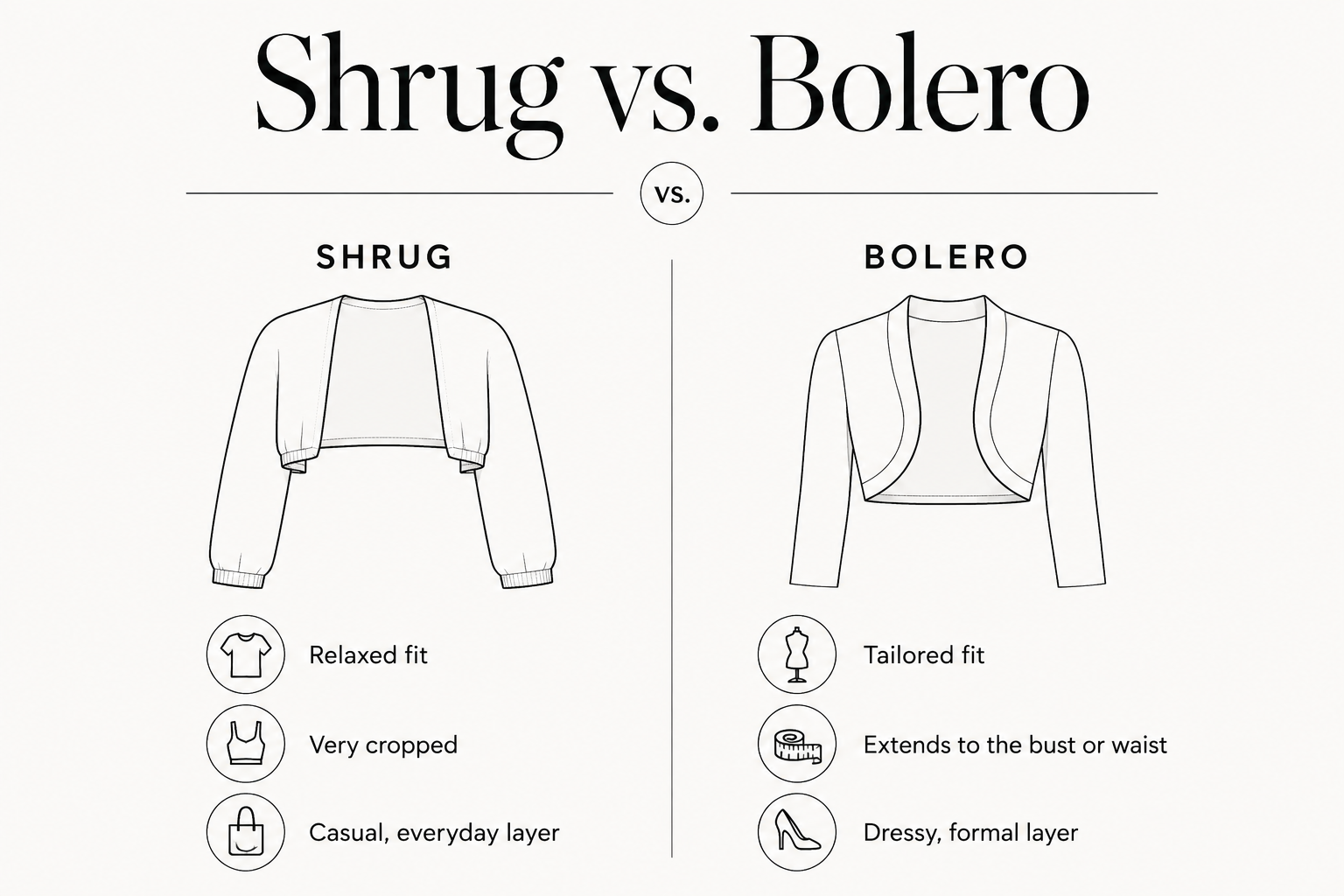
While shrugs and boleros are both cropped layering pieces designed to complement sleeveless styles, they each create a distinct look. A shrug offers soft, lightweight coverage with a relaxed feel, while a bolero features more structure and tailoring for a polished finish. Here are the key differences between a shrug and a bolero:
Feature | Shrug | Bolero |
Length | Cropped above the waist | Cropped at or just above the waist |
Silhouette | Soft, relaxed, and lightweight | Structured, tailored, and polished |
Sleeve options | Short, three-quarter, or long sleeves | Most commonly long or three-quarter sleeves |
Common materials | Knit, jersey, crochet, lightweight fabrics | Knit, satin, faux fur, velvet, structured fabrics |
Coverage | Light coverage for shoulders and arms | More substantial coverage with added structure |
Front design | Usually open front | Open front or lightly fastened |
Formality | Casual to dressy casual | Dressy casual to formal |
Best for | Everyday wear, office layering, travel | Weddings, cocktail parties, evening events |
Pairs well with | Tank tops, dresses, jumpsuits, jeans | Cocktail dresses, gowns, tailored separates, skirts |
What Is a Shrug?
A shrug is a cropped, lightweight layering piece designed to provide comfortable coverage for the shoulders and arms while complementing sleeveless tops and dresses. Often considered a casual outfit addition, a shrug’s cropped length elevates the overall look of your outfit.
Design characteristics of a shrug
Soft, unstructured silhouette
Cropped length that typically ends above the waist
Open-front design without buttons or zippers
Available in short-, three-quarter-, or long-sleeve styles
Often made from lightweight knit, jersey, crochet, or stretch fabrics
Easy to layer over dresses, tanks, jumpsuits, and sleeveless blouses
Popular types of shrug styles
Knit shrug. A knit shrug is a lightweight layering piece that adds warmth and polish without overwhelming your outfit.
Embellished shrug. An embellished shrug instantly elevates simple outfits with decorative details, such as beading, sequins, or pearls.
When to wear a shrug
At the office. A knit shrug adds warmth in air-conditioned offices while maintaining a polished appearance over sleeveless dresses, blouses, or work separates.
Casual outings. Layer a shrug over a tank top, T-shirt, or casual dress for brunch, shopping trips, or coffee dates when temperatures fluctuate throughout the day.
Travel. Shrugs are easy to pack and ideal for chilly airplanes, restaurants, or changing weather during vacations.
Outdoor events. Garden parties, outdoor dinners, and evening celebrations often call for a lightweight layer that complements your outfit without hiding it.
Formal occasions. An embellished shrug offers elegant shoulder coverage for weddings, galas, or evening events while allowing your dress to remain the focal point.
In the classroom. Shrugs are a great addition to teacher outfits, adding coverage and warmth throughout the day.
How to style a shrug
Wear a lightweight shrug over a dress to keep your arms warm while adding coverage.
Find balance by wearing a cropped shrug with high-waisted trousers.
Layer a shrug over a camisole to add texture to your look.
What Is a Bolero?
A bolero is a very cropped jacket that has more structure than its shrug cousin. Boleros also come in a range of fabrics, from tailored knits to faux fur to duchess satin.
Design characteristics of a bolero
Structured silhouette with tailored shaping
Cropped length that highlights the waist
More substantial construction than a shrug
Open-front or lightly fastened design
Available in knit, satin, faux fur, velvet, and specialty fabrics
Adds definition to dresses, jumpsuits, skirts, and tailored separates
Popular types of boleros
Knit bolero. A knit bolero offers the polished structure of a jacket with the comfort and flexibility of a polished sweater.
Faux-fur bolero. A faux-fur bolero adds luxurious texture and warmth, making it a sophisticated choice for formal occasions and cooler evenings.
Feather-trim bolero. A feather-trim bolero creates dramatic, statement-making style that instantly elevates cocktail and evening wear.
When to wear a bolero
Weddings. A satin or embellished bolero complements formal wedding guest dresses while providing elegant shoulder coverage throughout the ceremony and reception.
Cocktail parties. Pair a tailored or feather-trim bolero with a cocktail dress or jumpsuit for a sophisticated evening ensemble.
Formal celebrations. Holiday parties, galas, and charity events are perfect opportunities to incorporate luxe fabrics like velvet or faux fur.
Professional events. A knit bolero paired with tailored separates offers a polished alternative to a traditional blazer for networking events or business dinners.
Cooler evenings. Boleros provide just enough warmth without covering the details of your outfit, making them ideal for transitional weather.
How to style a bolero
Layer over a sleeveless sheath dress for polished occasion dressing.
Pair with tailored trousers and a silk shell for an elevated evening outfit.
Wear over a jumpsuit to add structure and sophistication.
Style with jeans and a fitted top to dress up casual denim.
Coordinate with matching fabrics for an elegant monochromatic look.
Should You Wear a Shrug or a Bolero?
If you’re not sure whether to wear a shrug or a bolero, here’s how the two styles compare across different situations:
Everyday wear. Choose a shrug for comfortable layering over casual outfits, sleeveless tops, and lightweight dresses.
Summer wedding. A bolero provides elegant coverage while complementing formal dresses without overwhelming the silhouette.
Long flight. A shrug is lightweight, comfortable, and easy to remove or pack away during travel.
Business meeting. A bolero creates a more structured, professional appearance that pairs beautifully with tailored dresses or separates.
Cocktail party. A bolero, especially in satin, velvet, or embellished fabrics, adds sophistication that complements evening attire.
Date night. Either option works depending on the look you're creating. A shrug feels relaxed and effortless, while a bolero instantly makes the outfit feel more elevated.
Our advice when it comes to the shrug vs. bolero? Have at least one of each. A chic alternative to your basic cardigan or jacket, these toppers are essential for rounding out your wardrobe.
Shrug vs. Bolero: FAQs
Are shrugs and boleros still in style?
Yes. Both shrugs and boleros remain timeless layering pieces because they add versatile coverage while complementing modern dresses, jumpsuits, and sleeveless tops. Choosing contemporary fabrics and clean silhouettes keeps either style feeling current.
Should I wear a bolero or a shrug with an evening dress?
For formal occasions, a bolero generally creates a more polished, structured finish, while a shrug offers softer coverage and a more relaxed feel. The best choice depends on your dress, the event's dress code, and the overall look you want to achieve.
What’s the difference between shrugs vs. cardigans vs. boleros?
A shrug is a lightweight cropped layer designed primarily to cover the shoulders and arms. A cardigan is longer, more versatile, and typically features a button-front closure. A bolero is a structured cropped jacket that adds tailoring and sophistication to both casual and formal outfits.
Layer with Confidence
Whether you gravitate toward the effortless comfort of a shrug or the polished sophistication of a bolero, both pieces prove that thoughtful layering can completely transform an outfit. From everyday dressing to wedding guest outfits and special occasions, these versatile wardrobe staples make it easy to add comfort, confidence, and refined style without compromising your look.
Explore WHBM's collection of elevated layering pieces, elegant dresses, and polished separates to discover versatile styles designed to complement every occasion and help you dress with confidence season after season.